
Student's Project
Hydraulic Bridge with Hydraulic System
Civil Engineering

Objective
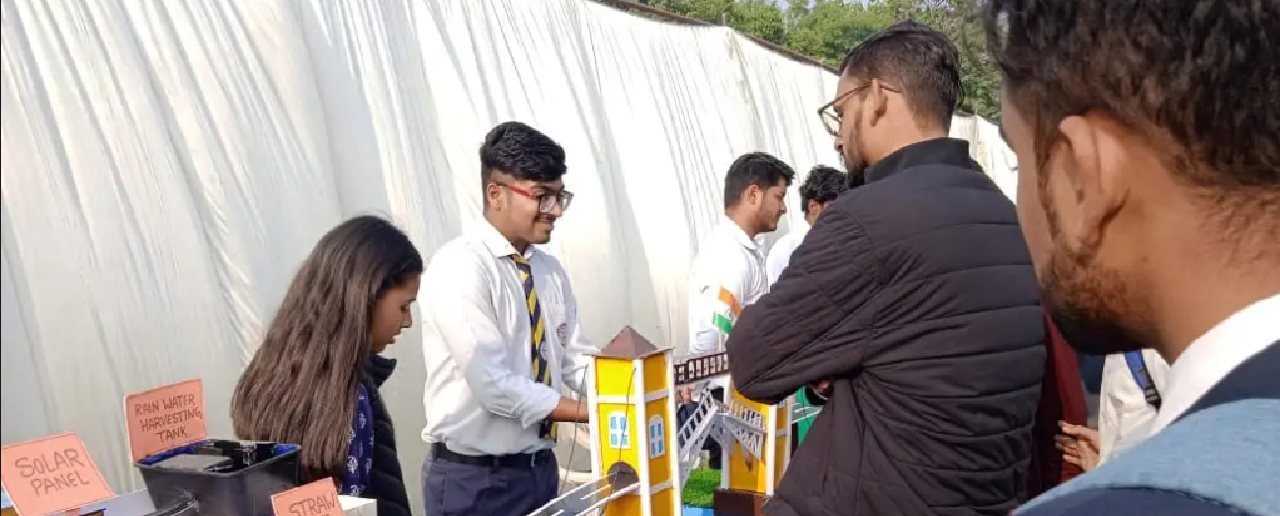
The primary objective of this project is to design, construct, and test a scaled-down model of a hydraulic bridge. This model will incorporate a functional hydraulic system to simulate the lifting and lowering mechanisms of a real-world bridge. Through this project, we aim to:
- Understand the fundamental principles of hydraulics and their application in civil engineering.
- Develop practical skills in model design, construction, and testing.
- Explore the feasibility and efficiency of hydraulic systems for bridge operation.
- Identify potential improvements and optimizations for hydraulic bridge designs.
Applications
- Educational Purposes: Demonstrate the principles of hydraulics and bridge engineering to students of different levels.
- Research and Development: Serve as a platform for testing new concepts and technologies related to bridge design and operation.
- Model for Real-World Bridges: Provide valuable insights for the design and construction of actual hydraulic bridges.
- Disaster Preparedness: Simulate emergency situations and test the performance of the bridge under extreme conditions.
- Architectural and Urban Planning: Visualize and analyze the impact of different bridge designs on the surrounding environment.
- Transportation: Marine Traffic, River Crossings, Canal Locks
- Environmental: help mitigate flood risks, minimize impacts on aquatic life and habitats.
- Military: Rapid deployment in tactical situations
- Offshore Platforms: Provide access to offshore structures for maintenance and operations.
- Urban Development: Optimize land use and traffic flow.
Future Prospects:
- Advanced Hydraulic Systems: Investigate the integration of more complex hydraulic components, such as proportional valves and servo-controlled actuators, for precise bridge control.
- Structural Optimization:Conduct structural analysis to optimize the bridge design for load-bearing capacity and efficiency.
- Energy Efficiency: Explore alternative power sources and energy-saving measures for the hydraulic system.
- Sensor Integration: Implement sensors to monitor bridge position, load, and environmental conditions.
- Automation: Develop automated control systems for bridge operation, including remote control and autonomous decision-making.
Team Members
- Ms. Neha
- Mr. Vigyaat Sharma
Mentors
Mentor: Mr. Lovejeet Singh





 Download Brochure
 admission@coeruniversity.ac.in
 +91 80705 00600

